
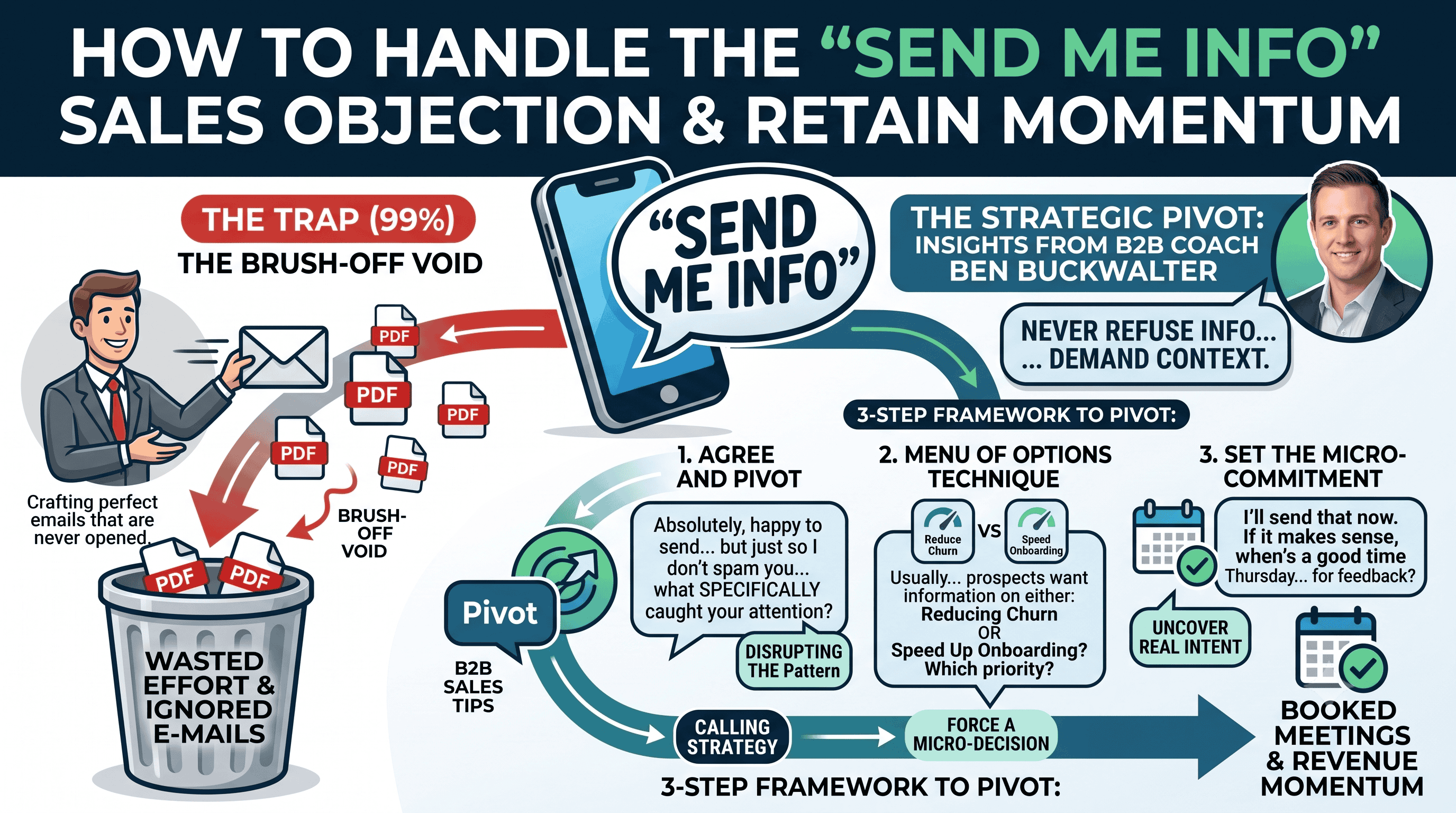
It is the most common phrase in B2B prospecting: "Sounds interesting, but I'm really busy right now. Can you just send me some info?"
Inexperienced sales reps often hear this and get excited. They think the prospect is genuinely interested. They enthusiastically agree, spend twenty minutes crafting the perfect email with three PDF attachments, hit send, and then... they never hear from the prospect again.
In 99% of cases, "send me some info" is not a buying signal; it is a polite brush-off. It is the easiest way for a busy decision-maker to get you off the phone without a confrontation. In this guide, we will break down how to stop falling into this trap, featuring strategies from business coach Ben Buckwalter on how to pivot this objection into a booked meeting.
When a buyer asks you to send an email, they are protecting their time. They have not yet heard enough value to justify staying on the phone, but their brain wants to avoid the social discomfort of hanging up or saying a flat "no."
If you immediately say, "Sure, I'll send that right over!", you surrender all control of the sales process. You become a passive participant waiting for an email reply that will never come. To maintain momentum, you must disrupt this pattern. You have to respectfully challenge the request without causing friction.
As a business coach who trains high-performing sales teams, Ben Buckwalter teaches reps that every objection is an opportunity for discovery, provided you do not get defensive.
"You should never refuse to send the information, but you must demand context," Buckwalter advises. "If you send a generic brochure, it goes straight to the trash. You have to ask the prospect exactly what they want to see, which forces them to reveal their actual business pain."
This technique relies on tactical empathy. You agree to their request, lowering their defenses, and then immediately pivot. If you are struggling with this type of conversational agility, it is crucial to review The Most Common Sales Objections and How to Respond to build your foundational muscle memory.
When you hear this objection on your next cold call, do not panic. Use this three-step framework to keep the conversation alive and uncover real intent.
The moment you argue with a prospect, you lose. Start by enthusiastically agreeing to their request.
By agreeing, you remove the tension. By asking what to include, you force the prospect to either admit they were just trying to get rid of you, or articulate a specific problem they are facing. This is a core component of B2B Cold Calling: What to Say, What to Avoid, and What Works.
If the prospect is highly guarded, they might reply with, "Just send a general overview." Do not accept this. Give them a menu of specific pain points to choose from.
This forces the prospect to make a micro-decision. Once they pick an option, they have officially engaged in a real discovery conversation.
If you do agree to send the email, never hang up without setting the next step.
If they refuse to schedule a follow-up, you know they are not a qualified buyer, and you can comfortably move on. By asking for this small commitment, you are practicing How to Close Sales Without Sounding Pushy, keeping the pipeline moving without being aggressive.
"Send me some info" is rarely the end of the line; it is just a test of your conversational skill. By agreeing, pivoting to specific business pains, and securing a micro-commitment, you can turn the industry's most common brush-off into a high-value pipeline opportunity.

