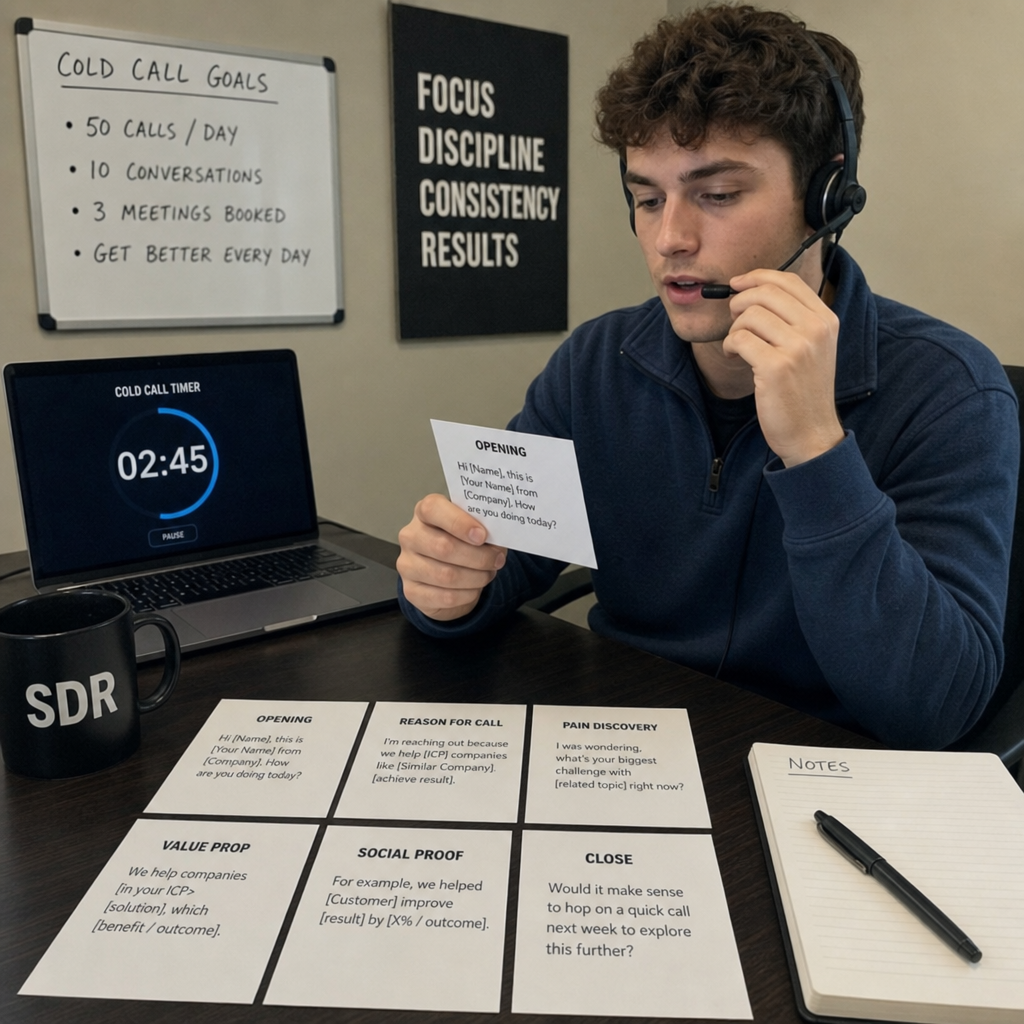
Top Strategies for Effective Sales Development Training
BEN BUCKWALTER BLOG
Sales development is where pipeline is born—and where revenue leaks first when training is inconsistent. A high-performing team doesn’t happen because you hired “natural” prospectors; it happens because you built repeatable training programs that teach messaging, research, execution, and coaching rhythms. This guide breaks down Effective Strategies for Sales Development Training that help you standardize performance, reduce SDR ramp time, and keep results predictable—whether you’re building your first sales development training program or rebuilding one that’s grown messy.
What is sales development training (and why it’s different)?
What is sales development training? It’s the structured enablement process that equips Sales Development Representatives (SDRs) to generate qualified meetings through outbound and inbound prospecting—typically via email, phone, social, and video. It focuses on:
Targeting and prospect research
Messaging and personalization
Sales prospecting skills training across channels
Talk tracks, discovery for qualification, and meeting setting
Objection handling training for SDRs
Tool proficiency and workflow habits
Continuous coaching using performance data
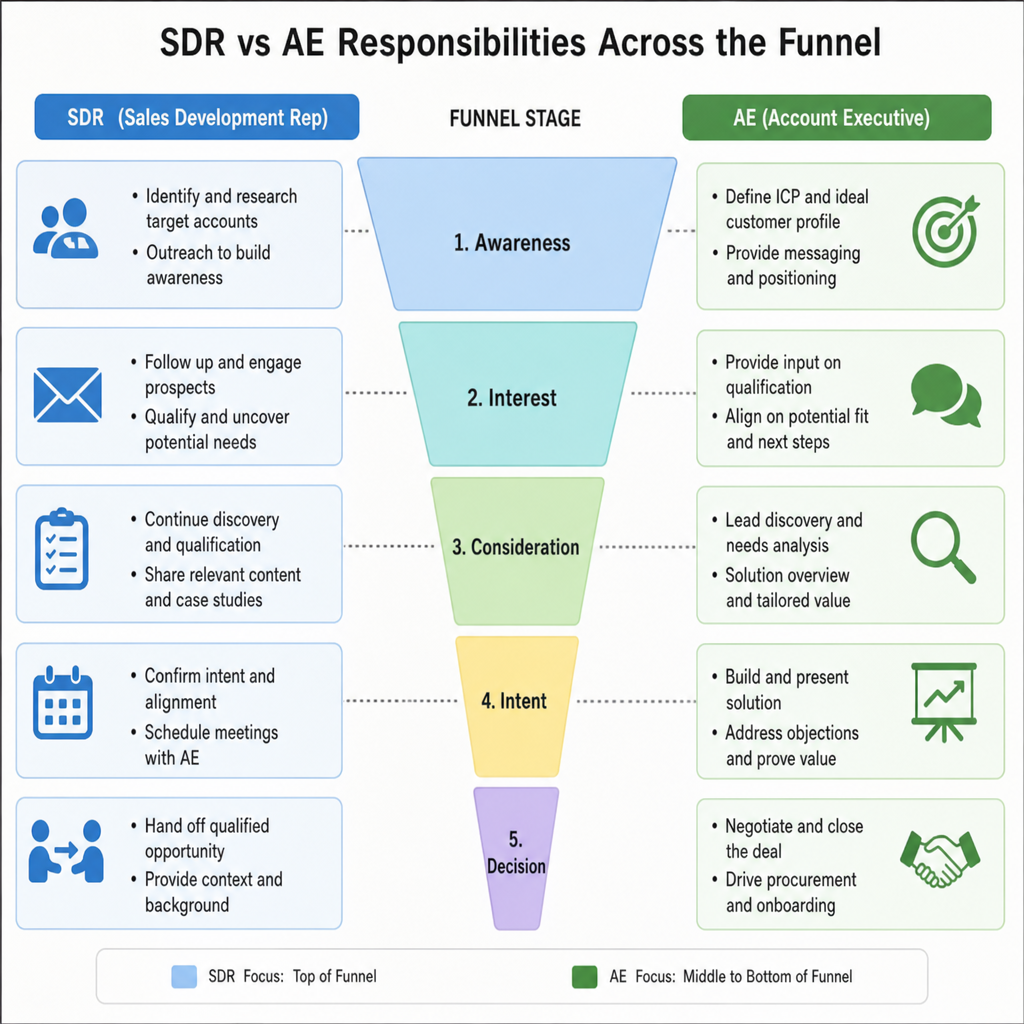
SDR training vs account executive training
SDR training vs account executive training differs in scope and depth:
AEs: deep discovery, deal strategy, negotiation, multi-threading, close plans, forecasting.
Training should overlap on fundamentals (ICP, value, qualification language), but the reps’ daily “game” is different—so the practice should be different too.
Strategy 1: Build a role-based curriculum (not a one-size-fits-all bootcamp)
The fastest way to waste time is to teach everyone everything. Design role-specific tracks:
Outbound SDR (net-new)
Inbound SDR (speed-to-lead + qualification)
Vertical/segment SDR (SMB vs Mid-Market vs Enterprise)
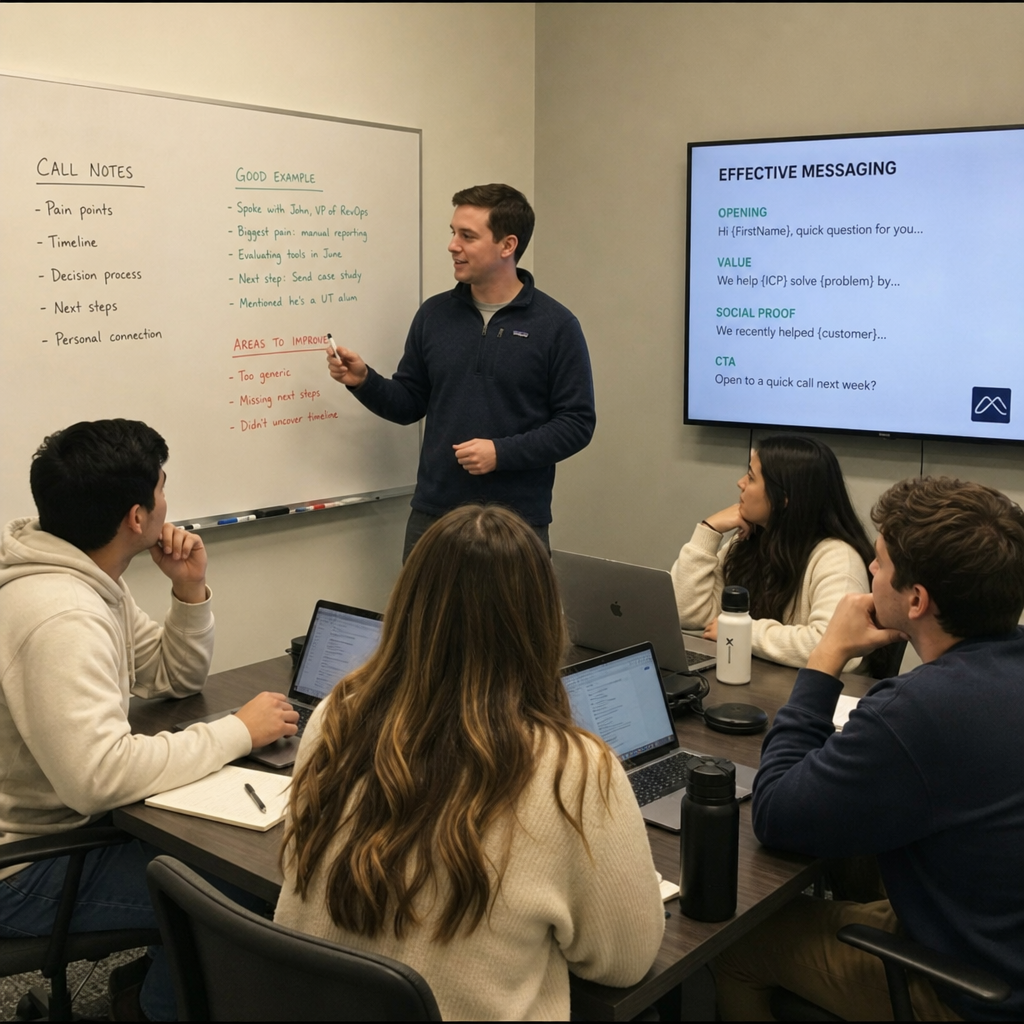
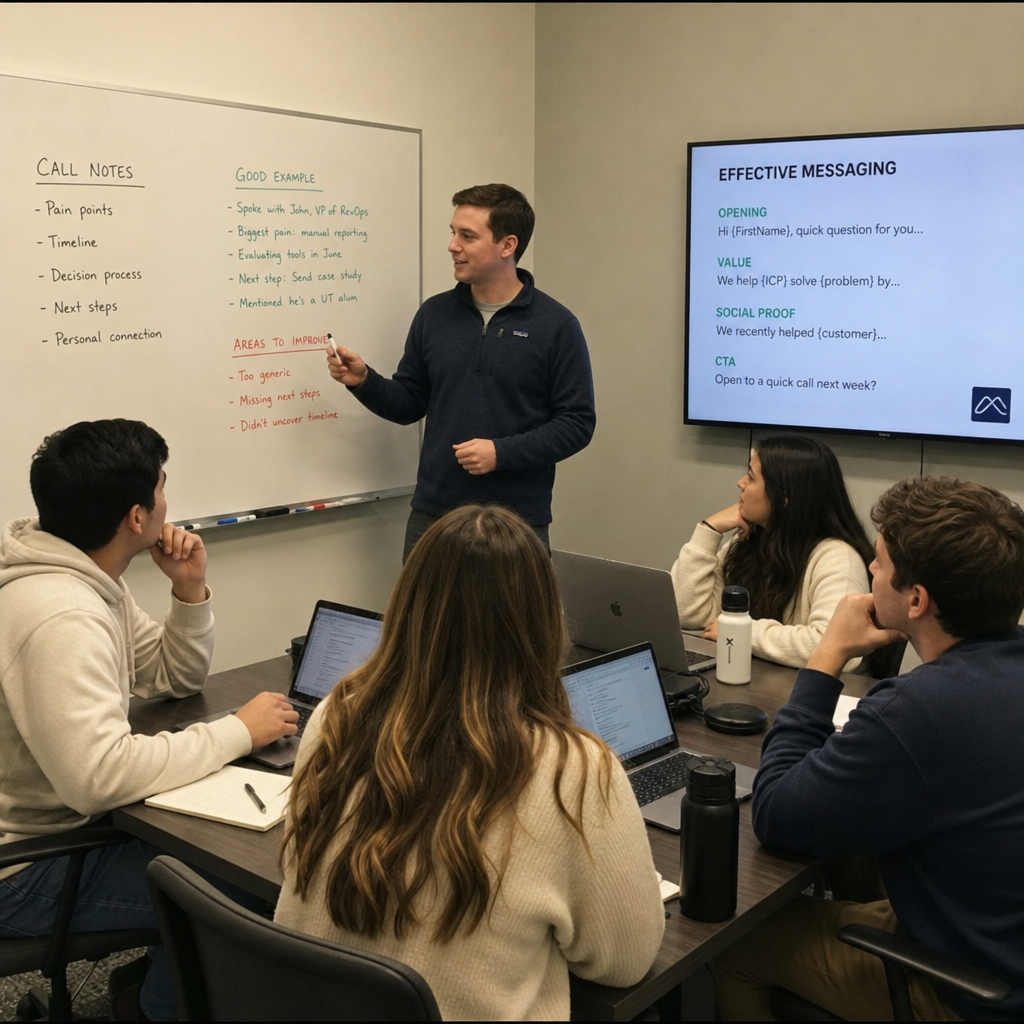
Live practice: role plays, mock inbox, call blocks with feedback
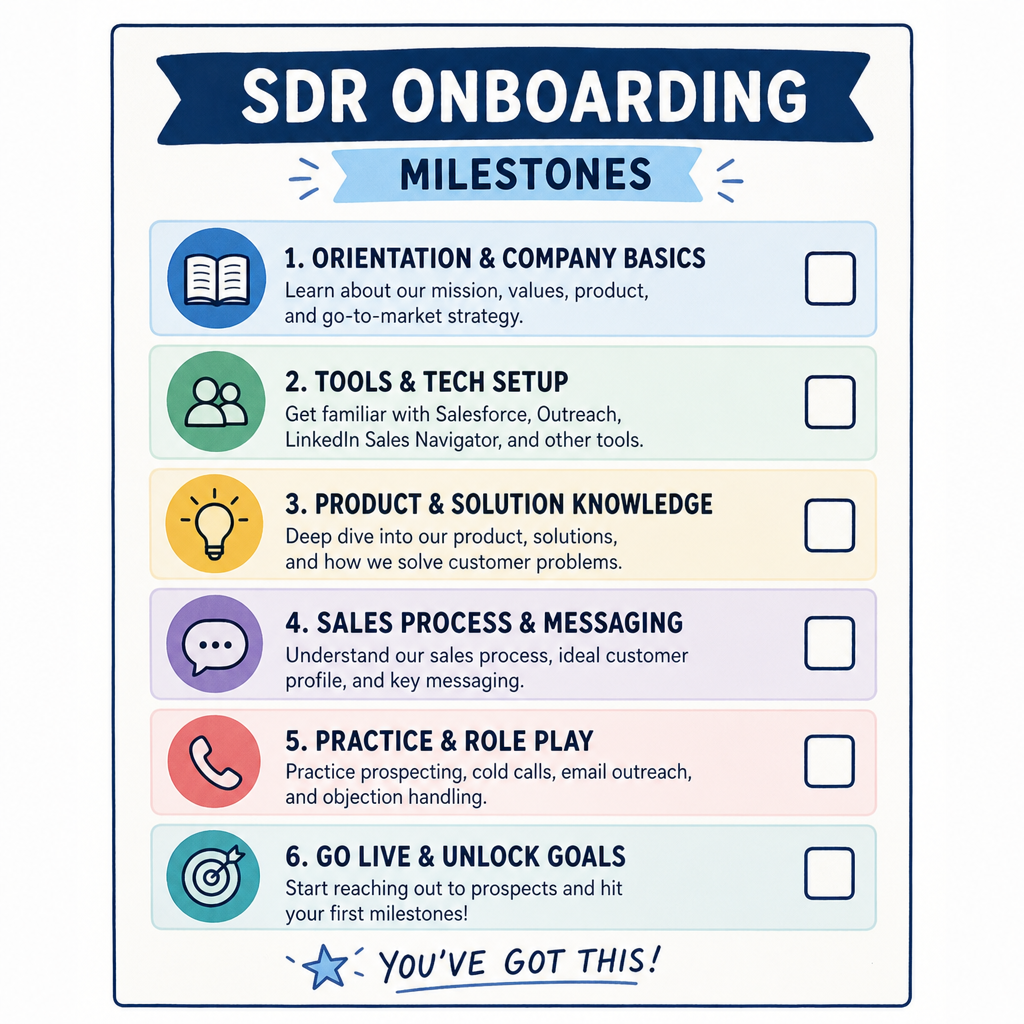
Certification: pass/fail rubric before going fully live
Treat the checklist like a production readiness list, not a reading list.
Strategy 3: Answer “how to train sales development reps” with a simple learn–practice–perform loop
If your enablement is mostly slides, you’re training memory—not performance. The best answer to how to train sales development reps is a repeatable loop:
Learn (short modules: 10–15 minutes)
Practice (role play + written drills)
Perform (live outreach)
Inspect (score + feedback)
Improve (micro-coaching + re-drill)
This is the backbone of Effective Strategies for Sales Development Training because it converts knowledge into behavior quickly.
Strategy 4: Use a measurable SDR coaching framework (with weekly rhythms)
An SDR coaching framework shouldn’t depend on a manager’s personality. Standardize coaching into three layers:
1) Daily micro-coaching (5–10 minutes)
One call snippet
One email rewrite
One objection drill
One “next 10 dials” target behavior
2) Weekly 1:1 coaching (30 minutes)
Review scorecard metrics
Diagnose one bottleneck (connect rate, convo-to-meeting, show rate)
Assign one drill + one live goal
3) Monthly calibration (team-wide)
Standardize what “good” looks like
Align scoring across managers
Update scripts, sequences, and talk tracks
This improves fairness, predictability, and speed of improvement.
Strategy 5: Train sales prospecting by channel—then teach orchestration
Great prospecting isn’t “email OR phone.” It’s coordinated. Build sales prospecting skills training in two steps:
Step A: Channel fundamentals
Email: subject lines, pain-based openers, credibility fast, single CTA
This is the practical path to reduce SDR ramp time without sacrificing quality.
Conclusion: train for behaviors, coach to metrics, certify to standards
The most reliable sales development training isn’t the flashiest—it’s the most repeatable. Focus on role-based curriculum, an actionable SDR onboarding checklist, a clear SDR coaching framework, frequent role play exercises for SDRs, and sales development training metrics that reward quality as well as volume. When your team can execute the same high-standard process every day, pipeline becomes predictable—and scaling stops feeling chaotic.